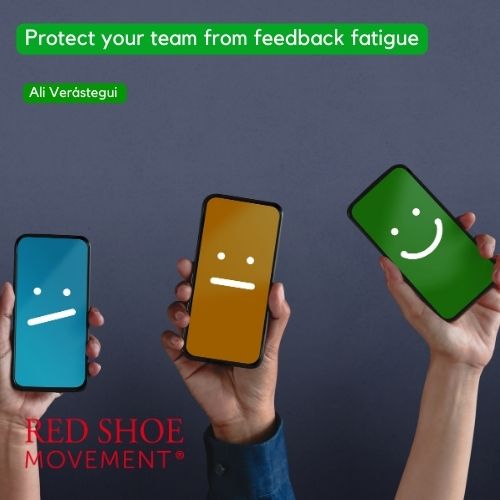




Ask most leaders if they give feedback, and the answer is yes. Ask most employees if they receive clear, actionable feedback, and the answer is… less enthusiastic. Some say the feedback they receive is vague. Others say it comes too late. Many say they only hear what’s working but not what needs to change.This disconnect is what many organizations experience as the feedback gap.
Research from Gallup shows that employees who receive meaningful feedback are significantly more engaged. Yet in practice, feedback often gets filtered, softened, or delayed to the point where it loses its value.

Why Feedback Gets Filtered Before It Lands
Feedback rarely travels in a straight line. By the time it reaches the employee, it has often been edited, sometimes beyond recognition. The reasons?
Leaders want to preserve relationships.
Giving direct feedback can feel uncomfortable, especially when the working relationship matters. This is particularly noticeable when leaders are women or are members of underrepresented groups. Because their focus is on preserving the relationship, they often soften the message and say things like:
“You’re doing great overall, just keep pushing.”
They wait for the “right moment.”
Instead of addressing issues early, feedback gets postponed and shared after the project, during the next review cycle or when things “settle down.” And by then, the moment to correct course has long passed.
They assume the employee already knows.
There’s also the expectation that high performers will “figure it out” on their own, but they often don’t see what their leaders see, so there’s no improvement.
They lack a clear language for feedback.
Without structure, feedback becomes abstract. When you hear things like “Be more strategic” “Show more leadership,” you may not know exactly what it is that is expected that you do differently.
What Employees Actually Experience
From an employee’s perspective, the feedback gap creates confusion. You work hard, deliver results, and often receive positive signals. Then, suddenly, you hear:
- “You need to step up more”
- “You’re not as visible as you could be”
- “There were concerns about how that project landed”
The reaction is predictable. The employee is confused about why they are only hearing these things now and not at a time when they could’ve made the appropriate adjustments. That’s the cost of delayed or diluted feedback: missed opportunities to improve in real time.
How to Close the Gap—Without Making Feedback Heavy
Closing the feedback gap doesn’t require more formal reviews. It requires clearer, more frequent conversations. Here are a few practical ways to make that happen:
Be specific about behavior and impact.
Instead of: “You need to be more strategic” Try: “In the last meeting, you focused heavily on details. It would help to start with the big picture. Talk about what decision we’re trying to drive and why it matters.” This gives the person something concrete to act on.
Shorten the feedback cycle.
Feedback is most useful when it’s close to the moment: After a presentation; following a meeting; during a project, not after it ends
Balance clarity with care.
Direct doesn’t mean harsh. You can be clear and respectful at the same time: “I want to share something that will help you be even more effective.” This signals intent—and opens the door for a real conversation.
Check for understanding.
To turn feedback into a dialogue, instead of a one-way message, don’t assume your message landed. Instead, ask: “What are you taking from this?” What will you try differently next time?”
Make feedback part of the culture, not an event.
When feedback only happens during formal reviews, it carries more weight and more anxiety. When it’s part of everyday interactions, it becomes a tool for growth, not judgment.
If you’re interested in building these and other critical leadership skills, join our Step Up program.