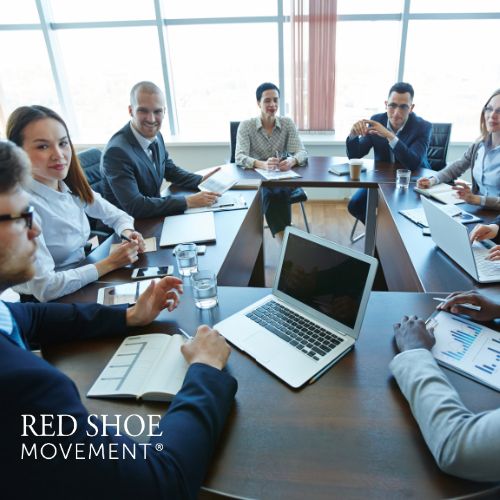




You have probably been in a meeting where people from Finance, Marketing, Operations, Technology, and Human Resources were discussing the same project while speaking completely different languages.
Finance focuses on cost. Marketing thinks about the customer. Technology worries about security and feasibility. Human Resources considers the impact on employees. Each person may be right, yet the conversation goes nowhere because nobody connects the pieces.
Then someone says, “If I understand correctly, Marketing’s idea could solve the customer problem, but Technology needs another three months to build it. Could we test a simpler version with one market while Finance evaluates the potential return?”
Suddenly, the group has a way forward.
The person who made that connection may have had no formal authority over anyone in the room. Yet, they just became one of the most valuable people in the meeting.
The Value of Seeing What Others Miss
Large organizations naturally divide people into functions, business units, regions, and levels. These structures help companies manage complex work, but they also create silos. Information that is obvious to one group may be completely invisible to another.
People who connect the dots pay attention beyond their immediate responsibilities. They notice when two teams are solving similar problems, when an idea from one industry could work in another, or when a decision made at headquarters will create an unexpected difficulty for employees in the field. They also notice when people from different groups, areas or backgrounds should meet to discuss specific challenges or to collaborate on a specific task.
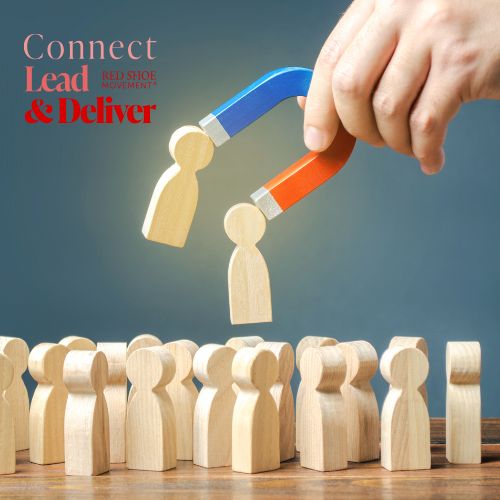
Researchers sometimes call these people network brokers. Research on structural holes and good ideas found that people who connect otherwise separated groups gain access to different ways of thinking and are more likely to see possibilities that others miss.
Their advantage comes from understanding enough of each perspective to translate between them.
Connecting Requires More Than Introducing People
But a good connector doesn’t simply say, “You two should meet,” and walk away. They explain why they are making the connection, what each person brings to the meeting.
They might tell a colleague in Product Development, “The customer service team has been tracking a complaint that could help you improve the next version.” Or they may tell a senior leader, “This change looks simple from headquarters, but employees in three countries will need a different process because of local regulations.”
This ability becomes especially important as AI gives everyone access to more information. Having the information won’t be a unique or even valuable skill. Recognizing which pieces belong together and helping people act on that insight will be.
Building bridges between disconnected groups is a good way to help others perceive you as a leader, as study on network brokerage and perceptions of leadership found.
Five Ways to Become a Dot Connector
1. Learn how other functions create value.
Ask colleagues what they are responsible for, what pressures they face, and how their success is measured. This will help you understand why they make certain decisions.
2. Listen for repeated problems.
When you hear similar concerns in different meetings, don’t assume everyone already knows. Try to connect the dots and bring the pattern to the attention of the people who can help you address it.
3. Translate specialized language.
Help people understand one another without making anyone feel uninformed. Replace acronyms and technical explanations with language that clarifies the business impact.
4. Explain the reason for every connection.
When introducing two people or ideas, state the opportunity you see. Give them a useful starting point for their conversation. Give each person relevant background on the other one.
5. Protect yourself from becoming invisible glue.
Connecting people can turn into endless coordination work that others fail to recognize. Research also shows that constant brokering can contribute to burnout. Keep track of the outcomes your connections generate and make your contribution visible.
You may find additional ideas in From Collaboration to Co-Ownership and The Science of Building Influence Across Hierarchies.
The person with the deepest expertise may solve one part of a problem. The person who connects the dots helps the organization see the whole picture and move forward together.