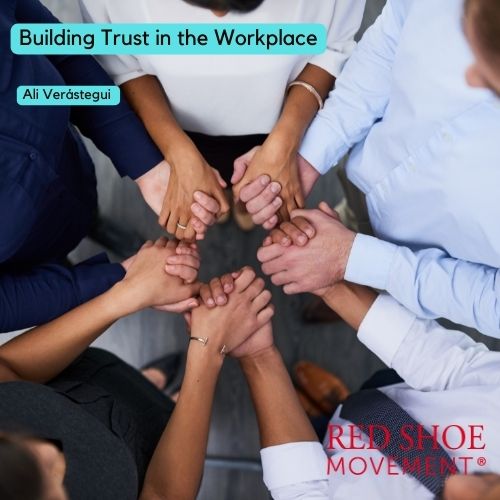




There was a time when trust at work was built through proximity. You saw who stayed late. You overheard conversations. You picked up on tone, body language, and informal cues throughout the day. It all changed with hybrid and remote work.
Now, much of what people do happens off-screen, which means that contributions are less visible. Interactions are more intentional and often shorter. So the question many professionals are quietly asking is: How do I build trust when people don’t see me working?
Trust remains one of the strongest drivers of engagement and performance in hybrid environments but the way it’s built has shifted to be more about signals than about presence.

Why Visibility No Longer Equals Credibility
In office settings, visibility often served as a proxy for contribution. If you were present, responsive, and engaged in meetings, people assumed you were adding value. The problem is that in hybrid environments, that shortcut doesn’t hold because:
Work is less observable.
Leaders don’t see the process, only the outputs. That makes it harder to infer effort or intent.
Communication is more selective.
Fewer spontaneous interactions mean fewer chances to clarify, adjust, or reinforce alignment.
Assumptions fill the gaps.
When information is limited, people draw conclusions and silence can be interpreted as disengagement, delayed responses as lack of urgency or enthusiasm, and short messages as lack of interest.
None of these may be true but perception shapes trust.
How to own the room on Zoom
The Signals That Build Trust Remotely
In hybrid work, credibility comes from what others can consistently observe through communication, delivery, and behavior. Consider these signals:
Clarity and follow-through.
When you commit to something and deliver as expected, trust builds quickly. Even more so when you communicate progress along the way.
Proactive communication.
Waiting to be asked creates uncertainty, so sharing updates, flagging risks, and clarifying next steps reduces it.
For example: “Quick update—on track for Friday. One potential delay on X, working through it.”
Responsiveness—with intention.
Being responsive doesn’t mean being always on. It means acknowledging messages and setting expectations: “Saw this—will get back to you by tomorrow afternoon.” That simple signal maintains momentum. The problem arises when you don’t provide a response and assume others understand what you mean by your silence.
Consistency in behavior.
Trust builds when people know what to expect from you:
- How you communicate
- How you handle deadlines
- How you show up in meetings
Visible support for others.
Acknowledging contributions, offering help, and staying engaged in team efforts signals reliability and partnership.
How Leaders Can Strengthen Trust Across Hybrid Teams
But let’s be clear, trust isn’t just an individual responsibility. It’s shaped by how teams are led. Here are a few ways leaders can reinforce it:
Set clear expectations.
Ambiguity erodes trust. So, be explicit about: Priorities, timelines, what “success” looks like and so forth. Clarity reduces second-guessing.
Create structured visibility.
Instead of relying on ad hoc updates, build simple systems:
- Weekly progress check-ins
- Shared dashboards
- Clear reporting rhythms
This ensures work is seen without requiring constant communication.
Model the behavior you want to see.
Leaders who communicate clearly, follow through, and stay consistent set the tone for the team.
Encourage context.
To create space for transparency, remember to ask frequently:
- What’s working?
- Where are you stuck?
- What support do you need?
Address assumptions early.
If something feels off, check it: “I haven’t heard from you on this. Anything we should be aware of?” This prevents misinterpretation or wrong assumptions.
If you’re interested in building these and other critical leadership skills, join our Step Up program.