



For a long time, experience worked like compound interest. The longer you stayed in the game, the more credibility you accumulated. People assumed that if you had been around long enough, you knew what you were doing.
That assumption is fading. Faster decision cycles, flatter structures, and AI-enabled work have changed how people grant credibility. Experience still matters, but it’s no longer enough. Influence now comes from how well you translate experience into value that others can immediately use.
This shift can feel unsettling, especially for professionals who have spent years building expertise. The good news is that the goal is not to abandon experience but instead to activate it in ways that match how modern organizations operate.
Why experience lost its automatic authority
Research on organizational trust shows that credibility is increasingly situational. People assign influence based on relevance to the current problem, not on years in the field. In environments shaped by rapid change, historical knowledge helps only when it can be applied quickly and clearly.
AI has accelerated this shift. When information is widely accessible, expertise is judged less by what someone knows and more by how they interpret, prioritize, and apply what is known. This explains why seasoned professionals sometimes feel talked over in meetings or bypassed in decisions: because very often it’s all about speed, framing, and the perceived proximity to the problem at hand.
Redefining credibility in modern organizations
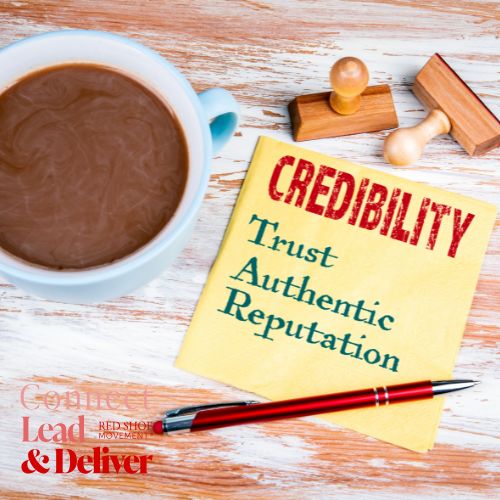
Nowadays, credibility depends on three key elements: relevance, clarity, and usefulness.
Relevance means your input clearly connects to the decision being made. Clarity means others can quickly understand your point without extra translation. Usefulness means your contribution helps people move forward.
One common trap is leading with conclusions based on past experience. While well intentioned, this can come across as disconnected from the current context. So, framing works better than telling. Instead of stating what should be done, highlight trade-offs, discuss risks and name what matters most right now.
Research on leadership communication shows that people who frame issues rather than dictate outcomes are seen as more credible and collaborative. Framing invites engagement and it signals that you are confident without trying to dominate the conversation.
Stay fluent in the present
One way in which credibility erodes quickly is when experience is paired with outdated assumptions. Staying current does not require mastering every new tool but it does require understanding how work is changing.
In addition, when you stay curious you project strength. Asking thoughtful questions about new approaches reinforces your credibility.
Use AI as a lens
In AI-accelerated organizations, influence often belongs to those who help others think better with technology. This does not mean becoming the most technical person in the room. Your credibility grows when you question assumptions, identify blind spots, and connect insights to real-world consequences.
Studies on human and AI collaboration show that the most trusted professionals are those who act as interpreters between data and decision-making. Experience matters greatly in that role.
Rebuild authority through contribution
Flatter organizations reward contribution over command. This means choosing when to step in and when to step back. Offering input early enough to shape outcomes. Letting others lead execution when appropriate.
Your credibility grows when others understand how you think, not just what you decide. So it’s critical to share your reasoning in order to build trust and invite alignment. This can be as simple as explaining why you are prioritizing one issue over another or what signal you are watching closely. Visible thinking reduces friction and positions you as a guide rather than a gatekeeper.
Experience still matters. You just need to translate it into value that today’s organizations can recognize, trust, and act on.
If you want to learn more about this and other power skills, join our Step Up Women program.