



“Collaboration” shows up in almost every corporate value statement. Teams are encouraged to share ideas, work together, and break down silos. And many do. Yet something often feels off. Work moves but at a slower pace than expected. Accountability blurs. And when outcomes fall short, it’s hard to pinpoint where things broke down. The truth is that collaboration on its own isn’t enough.
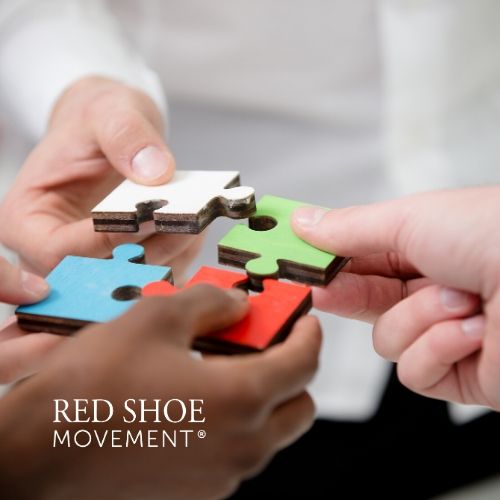
What high-performing teams build is co-ownership: a shared sense that this result belongs to all of us, not just the person leading the project.

Why Collaboration Often Falls Short
Collaboration creates participation but it doesn’t always create responsibility. One person is “leading” and others are “supporting,” which means that when challenges arise, the leader carries the weight while others wait for direction.
Input is shared, but decisions are centralized.
Teams contribute ideas, then look to one person, often the manager, to make the decision and this behavior tends to slow momentum and reinforce dependency.
Accountability is blurry.
When many people are involved, it becomes easier for everyone to assume someone else will follow through and accountability becomes blurry.
This all leads to a most common scenario where everyone shares updates at a meeting, they exchange ideas and raise issues but when the meeting ends, there’s no progress until the following one. A clear example of how people may be collaborating but there’s no ownership.
What Co-Ownership Looks Like in Practice
Co-ownership changes how teams think about results. It shifts the question from: “Who’s responsible for this?” to “How do we make sure we succeed together at this?”
For this method to work, team members don’t just complete their piece, but they stay engaged with the full result. If something slips in another area, they step in or raise the concern early. Instead o f waiting for direction, individuals ask: “What needs to happen next?” “Where can I unblock this?” As a result, momentum builds because action isn’t centralized.
It’s critical for everyone to understand where things stand—not just in their own lane, but across the project. Team members hold each other to commitments in a constructive way and not pointing fingers. “We said we’d have this ready by today, what’s getting in the way?”
How Leaders Can Build Co-Ownership
Co-ownership is built through how leaders structure work and conversations. You can encourage it by:
Defining success collectively. Before diving into tasks, align on:
- What are we trying to achieve?
- What does success look like from different perspectives?
When the outcome is shared, ownership follows more naturally.
Shifting from assigning to aligning.
Instead of distributing tasks top-down, get more commitment by involving the team: “Given our goal, who’s best positioned to take this on, and what support do they need?”
Make progress visible to everyone.
Use simple tools—shared trackers, dashboards, regular check-ins—to keep everyone informed.
Transparency reduces the chances of work falling through the cracks.
Encourage peer-to-peer accountability.
Create space for team members to follow up with each other, not just through the leader.
This builds a stronger sense of shared responsibility.
Recognize collective wins.
Celebrate outcomes as team achievements.
Highlight how different contributions came together to drive results.
If you’re interested in building these and other critical leadership skills, join our Step Up program.